You've Been Removing the Wrong Foods.
High oxalates aren't always a diet problem. Sometimes they're a gut problem.

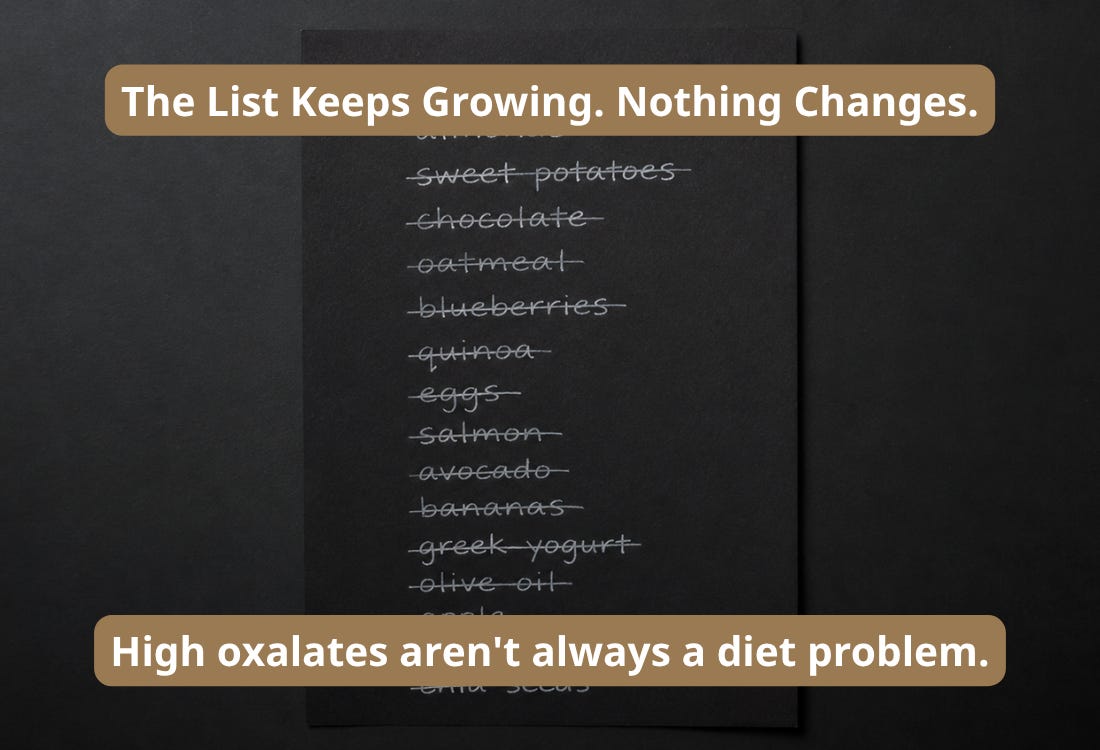
There was a point in my recovery where I had cut so many foods I didn’t know what was left to eat.
No almonds.
No spinach.
No sweet potatoes.
No chocolate.
I was working through every high-oxalate list I could find, removing anything flagged, and my labs still weren’t moving. I was testing myself the same way I do with every client and the oxalate markers weren’t budging.
I remember the frustration. What else do I cut?
Then I ran my organic acids test.
What came back wasn’t a food problem. It was a gut problem.
My arabinose was elevated. That’s a marker I watch closely on the OAT. When it’s high, I’m thinking yeast overgrowth and a microbiome that’s out of balance. And here’s what that actually means for oxalates: your gut is supposed to contain a specific group of bacteria (Oxalobacter formigenes being the primary one) whose entire job is breaking down oxalate before your body absorbs it. [1]
When your microbiome gets disrupted (antibiotics, chronic infections, mold exposure, dysbiosis) those bacteria get wiped out. And when they’re gone, oxalate has nowhere to go. It accumulates.
Your gut isn’t producing more oxalates. It’s lost the capacity to process the ones coming in.
That’s why the food list wasn’t working for me. I was reducing the incoming load while missing the part where my gut had stopped doing its job.
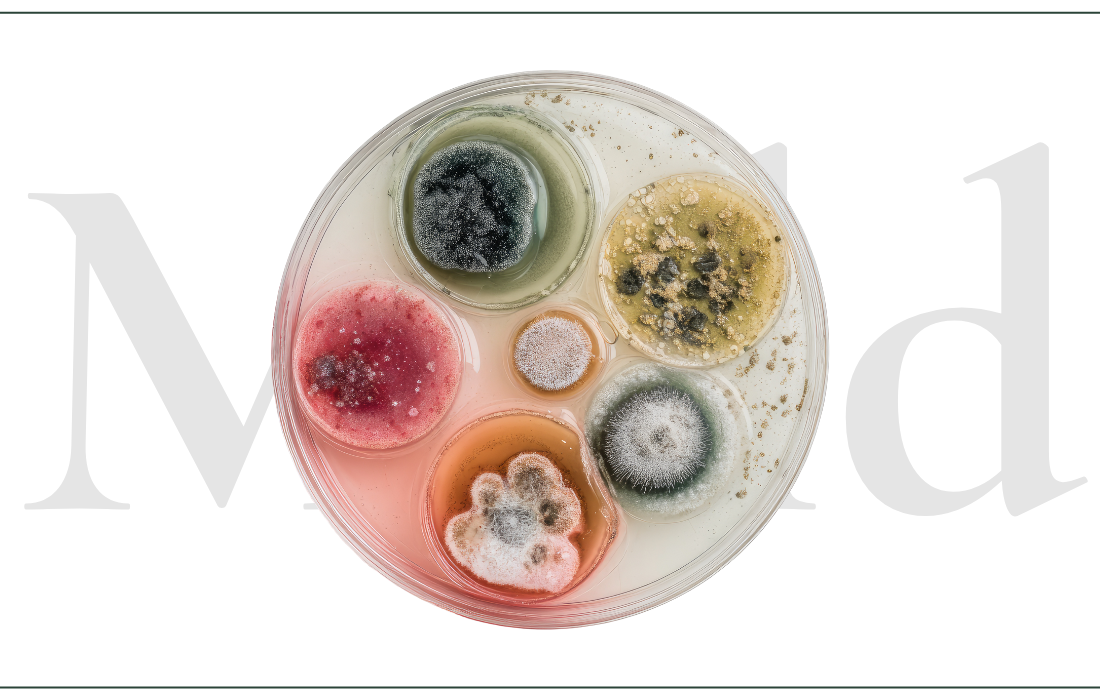
In my case, mold was a big part of the picture. I was dealing with mold toxicity during this period of my recovery, and mold exposure is one of the things that can wreck microbial diversity, including the bacteria specifically responsible for oxalate metabolism. The environment was the upstream driver of the gut problem that was driving the oxalate problem.
Once I understood that chain, the questions I was asking completely changed. Instead of “what should I cut next?” I started asking:
Is my microbiome depleted?
Have antibiotics or mold wiped out my oxalate-degrading bacteria?
Is yeast overgrowing in the environment those bacteria left behind?
Are my detox pathways backed up?
Are my kidneys under more pressure than they should be?
These are the questions that actually move the needle.
The research backs this up in a way I find compelling. A 2025 interventional study induced Oxalobacter formigenes colonization in non-colonized adults while controlling diet. After colonization was restored, urinary oxalate dropped by up to 54%. [2]
Restore the bacteria. Oxalate comes down. That’s not a diet change - that’s a microbiome change.
This is why I address the gut directly rather than just restricting foods. Lower the dysbiosis load. Rebuild the organisms that handle oxalate metabolism. Support detox so there’s a clear exit route. The food restrictions started mattering a lot less once the gut environment changed.
For the antifungal dysbiosis layer, Microbiome Support 3 is the formula I use when the OAT is pointing toward yeast overgrowth - Tarragon, Tinospora, Olive leaf, Thyme. And once the overgrowth is addressed, Probio Myces (Saccharomyces boulardii) is what I use to start rebuilding the microbial terrain.
The sequence matters: address the dysbiosis first, then rebuild.
The OAT is the test that unlocked this for me. It showed me what food lists couldn’t - what was actually happening inside the gut. If you’ve been cutting oxalate foods for months without results, this is likely the conversation worth having next.
Book a free 15-minute intro call at evanbrand.com/free. No commitment. Just a first look at whether your situation fits what we do in the Better Belly Program or 1-on-1 work.
And if you’ve been following this week’s content, the same root-cause framework is what I went deep on in the clinical piece I published this week - different condition, same principle. You can find it here
The elimination diet probably isn’t your answer. The lab probably is.
Be well,
Evan Brand, BCHN, FNTP
References
Mittal RD, et al. Effect of antibiotics on Oxalobacter formigenes colonization of human gastrointestinal tract. J Endourol. 2005. PMID: 15735393
Fargue S, et al. Inducing Oxalobacter formigenes colonization reduces urinary oxalate in healthy adults. Kidney Int Rep. 2025. PMID: 40485679
This post is for educational purposes only. Nothing here constitutes medical advice, clinical diagnosis, or a substitute for the care of a licensed physician. Evan Brand is a Board Certified Holistic Nutritionist (BCHN) and Functional Nutritional Therapy Practitioner (FNTP) — not an MD. Do not stop or change any prescribed medication without consulting your prescribing physician. Lab testing referenced in this post is conducted within a clinical consultation context — a flagged marker is not a standalone diagnosis. Aura Roots supplements are sourced from professional-grade, GMP-compliant manufacturers. As required by U.S. law: these statements have not been evaluated by the FDA, and these products are not intended to diagnose, treat, cure, or prevent any disease. Individual results vary. If you are experiencing a medical emergency, call 911.